
PRESENTOLOGI
PRESENTOLOGI
About
Web platform that uses AI to help users create and edit presentations, simplifying complex workflows.
Designed the full platform UI, including the AI-powered presentation editor. Conducted global and local benchmarking, built a scalable design system
for templates and features, and added animations and micro-interactions for an intuitive, engaging experience
Project type
AI app
Presentation tool
Roles
Principal designer
Deliverables
App architecture
UI design system
Benchmarking
Case 01
Designing the
AI-powered
presentation editor
Discover
UX testing showed that users were confused by blockchain delays, leading
to repeated clicks and many support tickets
Define
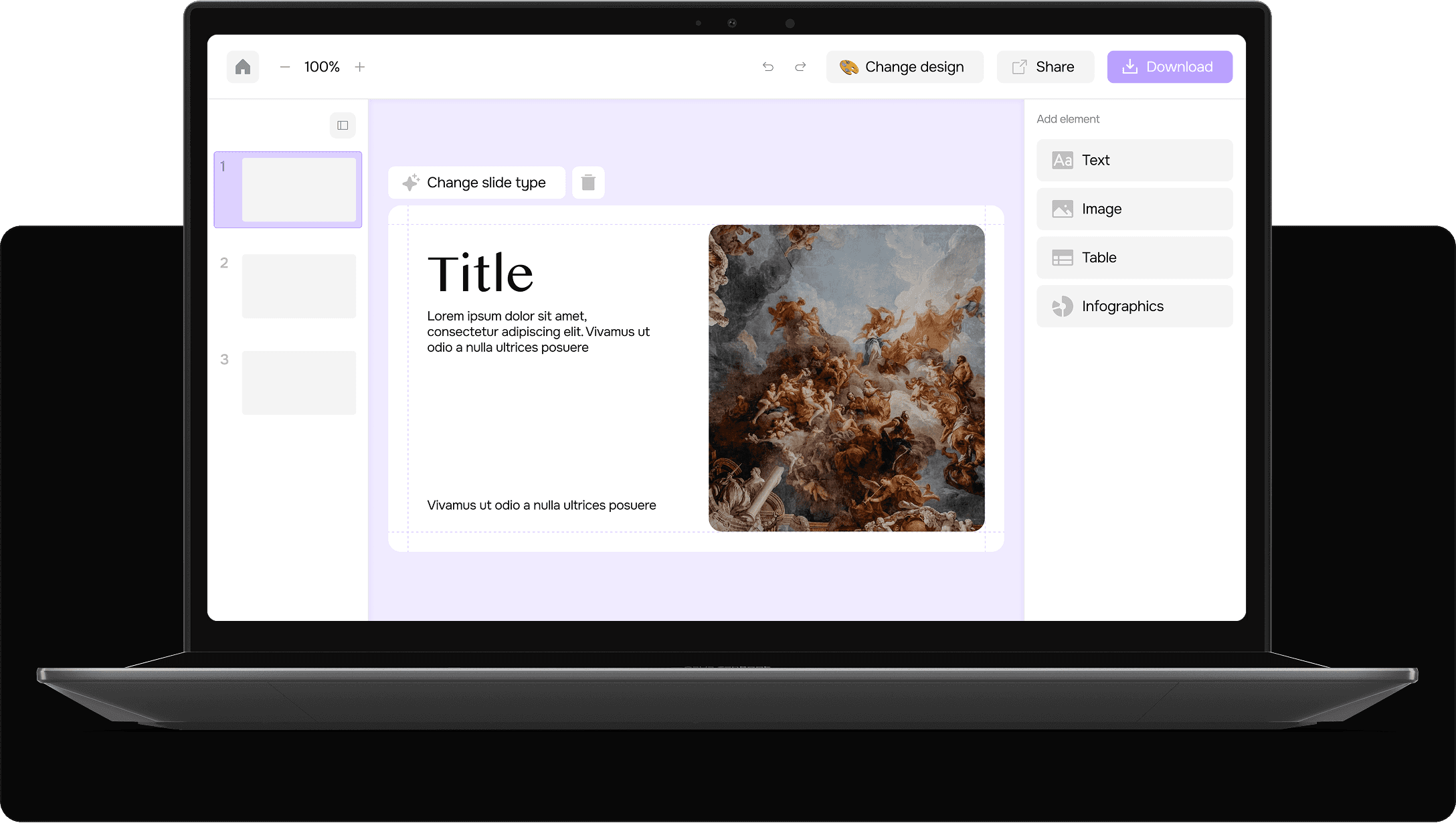
Traditional tools had steep learning curves. The goal was to design an AI-driven editor that felt simple and familiar
Develop
I built the full editor UI with AI chat integration, real-time previews, and micro-interactions for intuitive editing
Deliver
The editor became the main user entry point, enabling faster creation and reducing errors
Time to create
a presentation cut
Workflow adoption increased
Case 02
Benchmarking
global & local competitors
Discover
The presentation tools market was saturated but lacked AI-first workflows. Research was needed to find best practices and avoid UX pitfalls
Define
The risk was reinventing the wheel
or copying bad patterns. The goal was
to identify effective solutions and adapt them to Presentologi
Develop
I researched global and local competitors, highlighted effective flows, and tailored them to AI workflows
Deliver
Proven patterns were integrated, balancing innovation with familiarity
Design iteration cycles reduced
User drop-off during setup decreased

Case 03
Building a scalable
UI system
Discover
The platform required ongoing growth with templates, animations, and AI features. Without a design system, scaling would
be inconsistent and costly
Define
The risk was fragmentation as the product expanded. The goal was to create
a scalable design system
Develop
I built a UI system for templates, features, and modules, and created consistent patterns for visuals and interactions
Deliver
Design and dev teams worked from one source of truth, integrating features faster and more consistently
Design/
development time reduced
Feature integration speed improved

Questions
you might have
Where do I make the biggest impact?
What do I take ownership of?
How do I make decisions when data is limited?
How do I work with teams and help designers grow?
How do I help a product scale without losing quality?
How do I connect design decisions to product outcomes?
How do I use AI, 3D, and motion?
What working arrangements am I open to?
other projects
From the past few years


Cytonic airdrop
2024
UX testing
App architecture
Brand identity
UI Design
Pitch decks
Airdrop app
Web 3
Cytonic AI
2025
Airdrop app
Web 3


Questions
you might have
Where do I make the biggest impact?
What do I take ownership of?
How do I make decisions when data is limited?
How do I work with teams and help designers grow?
How do I help a product scale without losing quality?
How do I connect design decisions to product outcomes?
How do I use AI, 3D, and motion?
What working arrangements am I open to?
About
Project type
AI app
Presentation tool
Roles
Principal designer
Deliverables
UI design system
App architecture
Benchmarking
01
Designing the
AI-powered presentation editor
Define
Traditional tools had steep learning curves. The goal was to design an AI-driven editor that felt simple and familiar
Discover
UX testing showed that users were confused by blockchain delays, leading to repeated clicks and many support tickets
Develop
I built the full editor UI with AI chat integration, real-time previews, and micro-interactions for intuitive editing
Deliver
The editor became the main user entry point, enabling faster creation and reducing errors
Time to create
a presentation cut
Workflow adoption increased

02
Benchmarking
global & local competitors
Define
The risk was reinventing the wheel or copying bad patterns. The goal was to identify effective solutions and adapt them to Presentologi
Discover
The presentation tools market was saturated but lacked AI-first workflows. Research was needed to find best practices and avoid UX pitfalls
Develop
I researched global and local competitors, highlighted effective flows, and tailored them to AI workflows
Deliver
Proven patterns were integrated, balancing innovation with familiarity
Design iteration cycles reduced
User drop-off during setup decreased

03
Building a scalable
UI system
Define
The risk was fragmentation as the product expanded. The goal was to create a scalable design system
Discover
The platform required ongoing growth with templates, animations, and AI features. Without a design system, scaling would
be inconsistent and costly
Develop
I built a UI system for templates, features, and modules, and created consistent patterns for visuals and interactions
Deliver
Design and dev teams worked from one source of truth, integrating features faster and more consistently
Design/
development time reduced
Feature integration speed improved
Questions you might have
Where do I make the biggest impact?
What do I take ownership of?
How do I make decisions when data is limited?
How do I work with teams and help designers grow?
How do I help a product scale without losing quality?
How do I connect design decisions to product outcomes?
How do I use AI, 3D, and motion?
What working arrangements am I open to?